
Sublimation vs. Screen Printing vs. Embroidery for Custom Sports Jerseys: Which Is Best for Your Brand?
For most team jerseys, sublimation is the best choice. It prints full-color designs into polyester, it will not crack or peel, and the fabric stays light and breathable. Screen printing wins on very simple, low-cost jobs. Embroidery wins on premium details like logos and badges, but it rarely suits a full jersey.
Here is the quick pick:
- Choose sublimation if your jersey has gradients, patterns, many colors, or all-over designs.
- Choose screen printing if your design has one to three flat colors and your fabric is cotton or a cotton blend.
- Choose embroidery if you want a raised, high-end logo on a polo, jacket, cap, or the chest of a jersey.
The rest of this guide explains why, with costs, durability, and examples. It is written for club managers, league directors, event organizers, and brand founders who order in bulk.
Why This Choice Matters for Bulk Orders
The decoration method changes three things you care about:
- Price per jersey. Some methods get cheaper as you add colors. Others get more expensive.
- How the jersey feels and performs. Athletes notice weight, stiffness, and heat.
- How long it lasts. A jersey that cracks after ten washes hurts your brand.
You cannot fix a wrong choice after production. So it pays to compare the methods before you place the order.
Method 1: Sublimation
What It Is
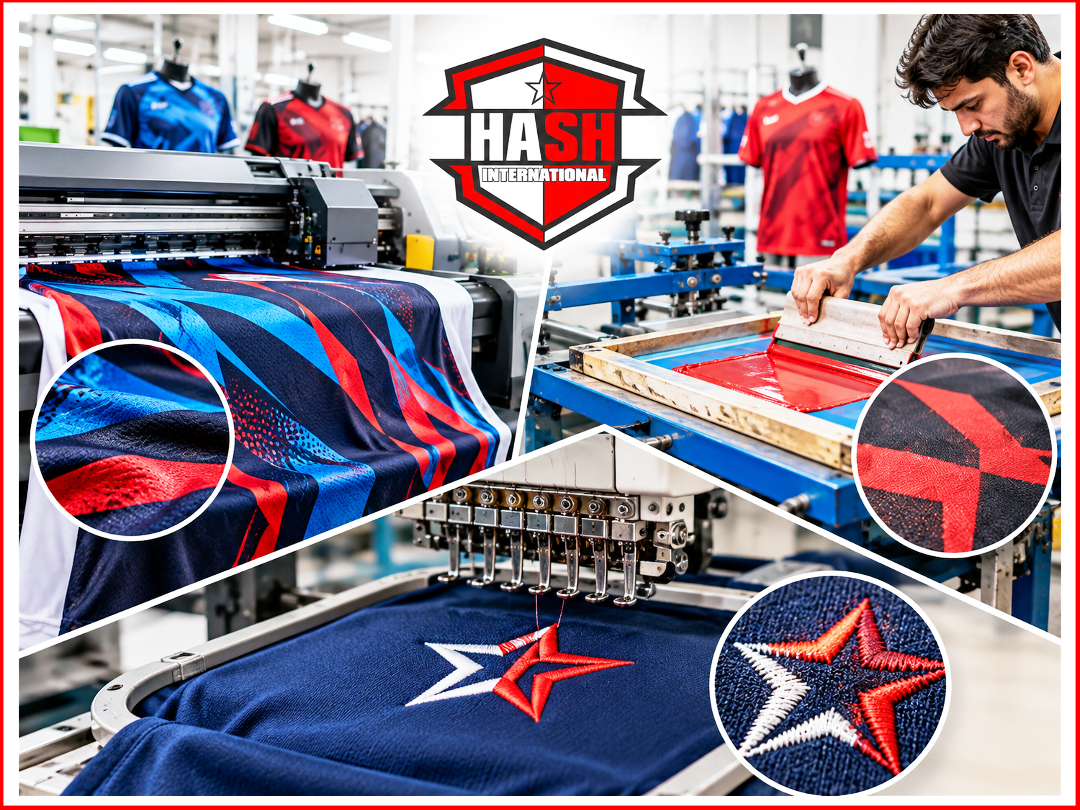
Sublimation is a printing process that uses heat and special dye. The design is first printed on transfer paper. Then a heat press (or a roll-to-roll calender machine) presses the paper onto the fabric at around 190–205°C (about 375–400°F).
At that heat, the dye turns into a gas. It enters the polyester fibers and locks in as the fabric cools. The color does not sit on top of the fabric. It becomes part of it.
Why Sports Brands Love It
- Unlimited colors. Gradients, photos, and detailed patterns cost the same as a plain design.
- No feel on the fabric. You cannot feel the print with your fingers.
- No cracking or peeling. There is no ink layer to crack.
- Stays breathable. The mesh and moisture-wicking features keep working.
- All-over designs. The print can run edge to edge, including seams, sleeves, and sides.
- Names and numbers can be printed too. You can print them in the same step, which removes extra labor.
Where It Falls Short
- It only works well on polyester. Cotton does not hold the dye. Polyester blends work only if the polyester content is high, usually 65% or more, and colors look softer on blends.
- Light fabric works best. Sublimation dye is see-through. You cannot print a light color on a dark jersey. White or light fabric gives the truest colors.
- Exact color matching is harder. Sublimation uses a four-color ink system (CMYK). Some bright colors and special shades, like true neon or metallic gold, are hard to match.
- Setup time. Pattern files, color proofs, and transfer paper take planning.
Simple Example
Say a school cricket league wants a jersey with a blue-to-white gradient, a pattern on the sleeves, and a sponsor logo in five colors. With sublimation, this is one print job. With screen printing, it would need many screens, and the gradient would not look smooth.
Method 2: Screen Printing
What It Is
Screen printing pushes ink through a mesh screen onto fabric. Each color needs its own screen. A three-color design needs three screens.
After printing, the ink is dried with heat. This is called curing. Plastisol ink, the most common type, cures at about 160°C (320°F).
Why Buyers Still Use It
- Cheap for simple designs. Once the screens are made, printing many pieces is fast.
- Works on many fabrics. Cotton, blends, and polyester can all be printed, with the right ink.
- Bold, opaque colors. The ink can sit on dark fabric and still look bright.
- Exact color matching. You can match a brand color using Pantone-style ink mixing.
- Special effects. Metallic, glow, and raised puff finishes are possible.
Where It Falls Short
- Each extra color costs more. More colors mean more screens, more setup, and more labor.
- Poor at gradients and photos. Smooth color blends are hard to do.
- The ink sits on top of the fabric. Large prints feel heavy and stiff.
- It can crack or fade. After many washes and hard stretching, thick ink can crack. This is common on cheap jobs with poor curing.
- It can block airflow. A big print on a performance jersey traps heat.
- Polyester can cause ink bleed. On polyester, dye from the fabric can move into the ink and change the color, especially white. Low-bleed inks help, but they cost more.
Simple Example
A local five-a-side tournament orders 200 cotton-blend fan shirts. The design is a white logo and event name on a navy shirt. That is two flat colors. Screen printing is quick and cheap here, and the shirts are not meant for hard play.
Method 3: Embroidery
What It Is
Embroidery uses a machine to stitch thread into fabric. First, a digitizer turns your logo into a stitch file. This file tells the machine where every stitch goes. Digitizing is a one-time setup cost, and the file can be reused for later orders.
Why Brands Choose It
- Premium look. Thread has texture and shine. A stitched crest looks high-end.
- Very durable. Good thread outlasts the garment.
- Great for structured items. Polos, jackets, caps, and warm-up wear carry embroidery well.
- Strong brand feel. Many clubs use embroidered badges for this reason.
Where It Falls Short
- Heavy on lightweight jerseys. Thin, stretchy sports mesh can pucker or bunch around stitches.
- Price rises with stitch count. A big, dense design can cost a lot.
- Limited detail. Tiny text and fine lines do not stitch well. Gradients and photos are not possible.
- Can irritate skin. The back of the stitches can rub on the athlete’s skin unless a soft backing is used.
- Slower to make. Large embroidered areas take more machine time.
Simple Example
A golf club wants a logo on 150 polo shirts for staff and members. The logo is small, with three colors. Embroidery gives it a clean, upscale look. It would be a poor choice for a full match-day jersey for a football team.
Side-by-Side Comparison
| Factor | Sublimation | Screen Printing | Embroidery |
|---|---|---|---|
| Best fabric | Polyester | Cotton, blends, polyester (with the right ink) | Cotton, polos, jackets, caps, thicker knits |
| Colors | Unlimited (full color) | Limited by screens | Limited by thread colors |
| Gradients & photos | Excellent | Poor | Not possible |
| Feel on fabric | None, very light | Noticeable, can be heavy | Raised and textured |
| Breathability | Not affected | Reduced on large prints | Reduced where stitched |
| Cracking or peeling | No | Possible over time | No |
| Fading in wash | Very low | Moderate over time | Very low |
| Dark fabric printing | Not suitable | Yes | Yes |
| Cost for many colors | Same cost | Rises with each color | Rises with stitch count |
| Best order type | Full jerseys, kits, all-over designs | Simple 1–3 color jobs | Logos, badges, premium wear |
| Premium feel | Modern, sporty | Basic to mid | High-end, classic |
Cost: What Really Drives the Price
Prices change by factory, quantity, and design. But the logic below stays the same.
Sublimation Costs
- Cost stays almost flat as you add colors.
- Setup includes design proofs, color checks, and transfer paper.
- The price per piece often drops with larger orders.
- Fabric and cut-and-sew labor matter as much as the print itself.
Screen Printing Costs
- Each color adds a screen and setup time.
- One or two colors on a large order can be the cheapest option.
- Four or more colors can cost more than sublimation.
Embroidery Costs
- You pay once to digitize the logo.
- Then you pay mainly by stitch count and number of placements.
- Small logos are affordable. Large back or full-front designs get expensive fast.
Rule of Thumb
- 1–2 colors, simple, cotton: screen printing is usually cheapest.
- 3+ colors, patterns, or gradients, polyester: sublimation usually wins.
- Small premium logo: embroidery is worth the extra cost.
Always ask your supplier for a quote on two methods before choosing. The difference can surprise you.
Durability: How Each Method Holds Up
Sublimation
The dye is inside the fibers. It will not crack or peel. Over time, the polyester itself can fade a little from strong sunlight, chlorine, or harsh detergent. A good print should stay sharp for the life of the jersey.
Screen Printing
Quality depends on curing. If the ink is under-cured, it can wash away or crack early. Well-cured prints last a long time, but large solid areas can still crack after heavy stretching.
Embroidery
Thread holds up very well. The weak point is the fabric around the stitches. On thin sportswear, stitches can pull or tear the fabric with rough use.
Care Tips You Can Share With Your Team
- Wash in cool or warm water, not hot.
- Turn jerseys inside out.
- Skip bleach and fabric softener.
- Air dry when you can.
- Do not iron directly on prints.
Performance on the Field
Athletes feel the difference, so think about the sport.
- Football, basketball, cricket, rugby, running, cycling: These need light, breathable, stretchy jerseys. Sublimation fits best.
- Casual team wear, fan shirts, event tees: Screen printing is fine.
- Coaches, staff, club blazers, caps, jackets: Embroidery looks sharp.
Many brands also mix methods. A common setup is a sublimated jersey with an embroidered or heat-pressed badge. This gives you a full-color design and a premium crest.
Matching the Method to Your Business
Sports Leagues and Clubs
You need many identical kits with team names, numbers, and sponsor logos. Sublimation handles names and numbers inside the same print process. That keeps kits consistent and speeds up production.
Event Organizers
You often need low-cost shirts fast. Screen printing is a strong choice for simple event designs on cotton.
Sportswear Brand Founders
Your jersey is your brand. Sublimation lets you build bold, unique looks that are hard to copy. It also lets you change designs often without paying new screen fees each time. Embroidery can add a premium detail, like a woven or stitched logo.
Corporate and Academy Orders
A mix works well. Sublimated training kits, plus embroidered polos and jackets for staff.
Common Mistakes Buyers Make
- Choosing by price alone. The cheapest method for one design may be the most expensive for another.
- Printing sublimation on the wrong fabric. Cotton and sublimation do not mix. Check the fabric content first.
- Ignoring the fabric color. Sublimation needs light fabric. If you want a dark base, plan the design around it, or choose another method.
- Using too many colors in screen printing. Costs rise fast.
- Putting heavy embroidery on thin mesh. The jersey can pucker and feel bad.
- Skipping samples. Colors look different on screen than on fabric. Always approve a physical sample before bulk production.
- Sending low-quality artwork. Send vector files (AI, EPS, PDF, SVG). Blurry images give blurry prints.
What to Ask a Factory Before You Order
Whether you work with a local supplier or search for an Italian dye sublimation factory, ask these questions:
- What fabrics and weights do you use for jerseys?
- What is your minimum order quantity?
- Do you offer free or low-cost fabric print samples?
- How do you match colors? Do you use color-calibrated printers?
- Do you test for colorfastness (wash, sweat, and light)?
- How long does sampling take, and how long does bulk production take?
- Can you do names, numbers, and sizes in one run?
- Do you offer OEM and private label services?
- What are your quality checks before shipping?
Good factories answer these clearly. If the answers are vague, take it as a warning sign.
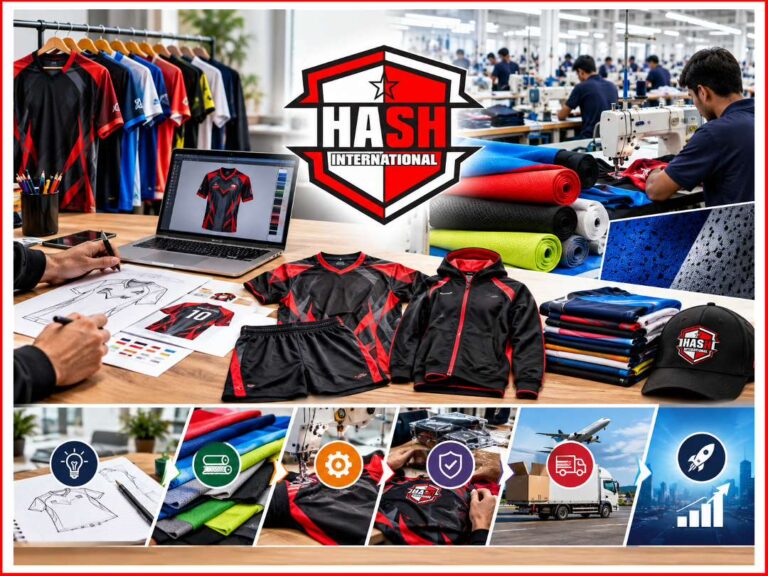
How the Process Usually Works
Most B2B jersey orders follow these steps:
- Brief. You share your design idea, sport, quantity, and budget.
- Artwork check. The team reviews files and fixes any problems.
- Mockup. You see a digital version of the jersey.
- Sample. You approve a physical print on real fabric.
- Bulk production. Printing, cutting, stitching, and finishing.
- Quality check. Each piece is checked for print, seams, and size.
- Shipping. Packed and sent on your schedule.
Ask for your timeline up front. Sampling is the step that most often causes delays.
Which One Should You Pick? A Simple Decision Guide
Answer these four questions:
1. What is your jersey fabric?
- Polyester: sublimation is possible.
- Cotton or cotton blend: screen printing or embroidery.
2. How complex is your design?
- Gradients, patterns, many colors: sublimation.
- One to three flat colors: screen printing.
- Small, detailed logo: embroidery.
3. What matters most?
- Comfort and performance: sublimation.
- Lowest cost on a simple job: screen printing.
- Premium look: embroidery.
4. How big is your order?
- Small orders with many colors: sublimation avoids per-color fees.
- Very large orders with simple art: screen printing can be the cheapest.
If you are still unsure, ask your supplier to quote two methods for the same design and compare the samples side by side.
Sublimation vs Screen Printing vs Embroidery
Which is best for custom sports jerseys?
The 3 Methods at a Glance
Sublimation
Top pickScreen Printing
Budget pickEmbroidery
Premium pickWatch Out
Pick in 10 Seconds
Before You Order
Frequently Asked Questions
Is sublimation better than screen printing for jerseys?
For most sports jerseys, yes. Sublimation does not crack, does not add weight, and handles full-color designs. Screen printing is better for simple designs on cotton or when you need an opaque print on dark fabric.
Can you sublimate on cotton?
Not well. The dye needs polyester to bond. On cotton, the color looks faded and washes out. Use polyester or a high-polyester blend.
Can you sublimate on dark jerseys?
No. Sublimation dye is see-through, so it cannot cover a dark base. For dark fabric, choose screen printing, heat transfer, or embroidery.
Does sublimation fade?
Very little. The dye is inside the fibers, so it does not wash off like ink on top. Long exposure to strong sun, chlorine, or harsh chemicals can still dull any colored fabric over time.
Which method is the cheapest?
It depends on the design. Screen printing is usually cheapest for one or two colors in large quantities. Sublimation is usually cheaper for multi-color designs. Embroidery costs the most for large designs.
Is embroidery good for football or basketball jerseys?
Only for small details, like a badge or logo. Heavy stitching on lightweight sports mesh can pucker the fabric and feel stiff against the skin.
How many jerseys do I need to order?
Minimums vary by factory and method. Screen printing and embroidery often have lower setup costs for small runs, while sublimation factories may set minimums for fabric and production. Ask your supplier for exact numbers.
Can I mix methods on one jersey?
Yes. A common choice is a sublimated body with an embroidered or heat-applied crest. Many premium kits use this approach.
What file type should I send for my design?
Send vector files such as AI, EPS, SVG, or PDF. If you only have a PNG or JPG, ask the factory if their designers can recreate it.
Do I need a physical sample before bulk production?
Yes, whenever possible. Screens show colors differently than fabric does. A sample lets you check color, fit, fabric feel, and print quality before you commit.
Final Takeaway
There is no single best method for everyone. There is a best method for your fabric, design, budget, and sport.
- Sublimation is the top pick for modern performance jerseys.
- Screen printing is the budget pick for simple, bold designs.
- Embroidery is the premium pick for small logos and structured wear.
Start with your design and fabric, then match the method. Test with a sample. Then order in bulk with confidence. Teams that do this avoid most costly mistakes.
Get Expert Help With Your Order
Not sure which customization method fits your design and budget? Contact Hash International today to consult with our technical apparel experts, get free fabric print samples, and receive a factory-direct OEM quote for your custom jersey order!
👉 Request your B2B custom apparel quote here
Whether you run a league, a club, or a growing sportswear label, Hash International can help you pick the right method before you spend a rupee on bulk production.